
Meta Description: Discover 15 practical ways to save money in 2026, reduce household expenses, cut monthly bills, build an emergency fund, and improve your financial future in the US and UK.
Suggested URL Slug: how-to-save-money-in-2026
Category: Personal Finance
Target Audience: United States and United Kingdom
Introduction
Saving money has become an important financial goal for households across the United States and the United Kingdom. From grocery shopping and housing costs to energy bills, transportation, and everyday purchases, managing household expenses can feel challenging. Even people with a regular income may find it difficult to put money aside after paying their essential bills.
The good news is that saving money does not always require a higher salary or major lifestyle changes. In many cases, small improvements to everyday spending habits can make a meaningful difference over time.
Whether you live in New York, California, London, Manchester, Birmingham, or a smaller town, having a practical financial plan can help you manage your money more effectively. The key is to understand where your money goes, identify unnecessary expenses, and establish realistic savings goals.
In 2026, technology can also make personal finance easier. Budgeting apps, online comparison tools, digital banking features, and automated transfers can help households monitor their spending and build savings more consistently.
This guide explores 15 practical ways to save money in 2026. You will learn how to create a household budget, reduce grocery expenses, lower recurring bills, avoid unnecessary debt, save on transportation, and build an emergency fund. Each strategy can be adapted to suit your income, lifestyle, and location.
1. Create a Realistic Monthly Budget
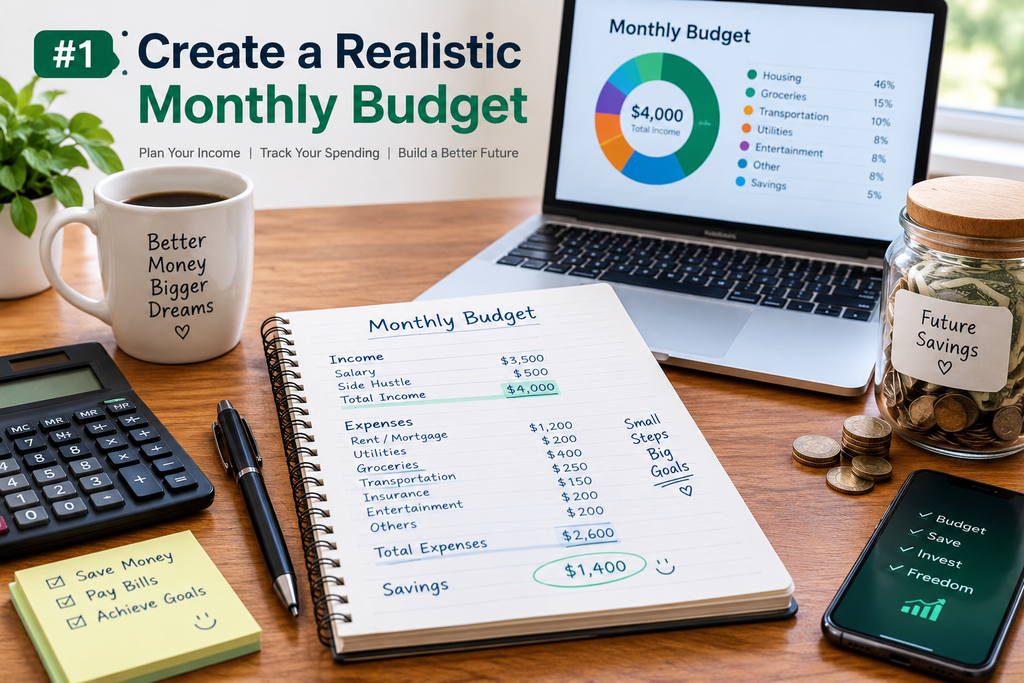
The first step toward saving money is understanding how much you earn and where your income goes each month.
Without a budget, it is easy to underestimate small expenses. A daily coffee, takeaway meal, streaming subscription, or frequent online purchase might seem insignificant individually. However, these costs can add up over weeks and months.
Start by calculating your total monthly take-home income. This is the amount you receive after taxes and other payroll deductions.
Next, list your essential expenses, including:
- Rent or mortgage payments
- Electricity, gas, water, and other utilities
- Groceries and household supplies
- Transportation and fuel
- Insurance premiums
- Phone and internet bills
- Minimum debt repayments
- Healthcare and childcare costs
After listing your essential expenses, calculate how much you spend on non-essential purchases, entertainment, eating out, and subscriptions.
The difference between your income and total spending shows how much room you have for saving or where you may need to make adjustments.
Try the 50/30/20 budgeting method
One popular budgeting framework divides take-home income into three categories:
- 50% for needs: Housing, groceries, utilities, transportation, and other essential expenses.
- 30% for wants: Entertainment, hobbies, dining out, and optional purchases.
- 20% for savings and debt repayment: Emergency savings, future goals, and additional payments toward eligible debts.
These percentages are guidelines rather than strict rules. In expensive housing markets, essential expenses may consume more than half of a household’s income. If that happens, adjust the percentages to reflect your actual circumstances.
Practical tip: Track your spending for 30 days before setting strict limits. Reviewing real spending data makes it easier to create a budget you can maintain.
2. Build an Emergency Fund
Unexpected expenses can disrupt even a well-planned budget. A car repair, urgent home maintenance, temporary loss of income, or unexpected medical expense may force you to borrow money if you have no savings available.
An emergency fund provides a financial cushion for these situations.
Start with a small, achievable target. For example, you might aim to save $500 in the United States or £500 in the United Kingdom, depending on your circumstances. These are illustrative milestones, not universal recommendations.
Once you reach your initial target, work toward saving enough to cover several months of essential living expenses. Three to six months is a common long-term goal, although the appropriate amount depends on your income stability, household responsibilities, insurance coverage, and access to other resources.
How to build your emergency fund
- Open a separate savings account for emergencies.
- Set up a small automatic transfer after payday.
- Add occasional extra income, refunds, or cash gifts when appropriate.
- Avoid using the fund for routine shopping or planned entertainment.
- Replenish it after withdrawing money for a genuine emergency.
If you cannot afford to save much right now, start with a small amount. Consistency is more important than choosing an ambitious target you cannot sustain.
For US households, compare eligible savings accounts and review applicable deposit protection. In the UK, check whether an account is covered by the Financial Services Compensation Scheme (FSCS), subject to its eligibility rules and limits.
3. Reduce Your Grocery Shopping Expenses
Food is a necessary household expense, but grocery spending can often be reduced without sacrificing nutrition or quality.
One of the simplest ways to save money is to plan meals before visiting the supermarket. Shopping without a list can lead to impulse purchases, duplicate ingredients, and food that eventually goes to waste.
Practical grocery-saving strategies
Plan meals for the week. Choose meals based on your schedule and the ingredients you already have at home.
Create a shopping list. Separate essential items from optional purchases and try to stick to the list.
Compare unit prices. A larger package is not automatically cheaper. Compare prices per ounce, pound, kilogram, or litre to identify better value.
Choose store brands. Supermarket own-brand products may cost less than national brands while meeting your household’s needs.
Use frozen and seasonal produce. Frozen vegetables and fruits can be useful alternatives when fresh produce is expensive or likely to spoil.
Reduce food waste. Store food correctly, freeze suitable leftovers, and plan meals around ingredients approaching their use-by dates.
Avoid shopping when hungry. Shopping after a meal may make it easier to resist unnecessary snacks and impulse purchases.
Grocery savings in the US and UK
In the United States, compare unit prices across supermarkets and consider store loyalty programmes where the savings justify the shopping conditions.
In the United Kingdom, compare supermarket prices, check reduced-price sections when appropriate, and plan purchases around seasonal produce.
Do not assume that every discount is a genuine saving. Buying an unnecessary product because it is on sale still increases your spending.
4. Review Your Subscriptions and Memberships
Subscription services can quietly consume a significant part of a household budget.
Streaming platforms, music services, cloud storage, premium applications, gym memberships, news subscriptions, and delivery programmes may renew automatically every month or year.
The problem is not necessarily the price of an individual subscription. It is the combined cost of services you rarely use.
Conduct a subscription audit
Review your bank and card statements for recurring payments. List each subscription, its price, renewal date, and how frequently you use it.
Then divide the services into three groups:
- Essential services you regularly use.
- Useful services you could share or downgrade where permitted.
- Services you rarely use and can cancel.
For example, cancelling three unused subscriptions costing $10 each per month would save $30 monthly, or $360 over a full year. The same principle applies to subscriptions priced in pounds.
Consider rotating streaming subscriptions rather than paying for several platforms simultaneously. You can subscribe to one service for a particular show or season and cancel when you no longer need it.
Also check annual memberships before renewal. A yearly payment may appear cheaper per month but could still be unnecessary.
Important: Review cancellation terms before ending a service, especially if you have an annual contract or early termination fee.
5. Lower Your Electricity, Gas, and Water Bills
Utility bills are essential expenses for most households, but there may be opportunities to reduce them through improved energy habits and suitable tariffs.
Start by examining your recent bills. Compare usage across months and identify whether higher costs result from increased consumption, seasonal changes, or tariff adjustments.
Reduce energy consumption at home
- Switch off lights when rooms are not in use.
- Use energy-efficient lighting.
- Avoid leaving electronics running unnecessarily.
- Wash clothes at lower temperatures when suitable for the fabric.
- Run dishwashers and washing machines with efficient loads.
- Improve draught-proofing where practical.
- Adjust heating and cooling settings to suit comfort and health needs.
- Maintain heating and cooling equipment according to manufacturer guidance.
Heating and cooling can represent a substantial part of household energy consumption, particularly in regions with very hot summers or cold winters.
If you rent your home, focus on changes you can make without permanent alterations. Homeowners may be able to consider insulation or more efficient equipment, but compare installation costs with realistic long-term savings before investing.
Compare energy tariffs
In the United States, check whether your utility offers different rate plans, time-of-use pricing, or programmes for which you qualify.
In the United Kingdom, compare available energy tariffs and review the contract’s rates, standing charges, exit fees, and payment conditions.
A cheaper headline rate does not always mean a lower total bill. Your actual savings depend on your usage and the complete tariff structure.
6. Compare Insurance Policies Before Renewal
Insurance protects you against certain financial risks, but premiums can differ between providers and policy options.
Depending on your circumstances, you may have car insurance, home insurance, renters insurance, health insurance, life insurance, or other forms of coverage.
When a policy approaches renewal, compare available alternatives rather than automatically accepting the renewal price.
Check the following details:
- Total annual premium.
- Deductibles or excess payments.
- Coverage limits.
- Exclusions and restrictions.
- Optional benefits.
- Claims procedures.
- Cancellation conditions.
A lower premium is not necessarily better if it provides substantially less protection.
For example, choosing a policy with a higher deductible may reduce premiums, but you must be able to afford the deductible if you need to make a claim.
In the United States, insurance requirements and available products vary by state and policy type. In the United Kingdom, coverage conditions and pricing also depend on the provider and your circumstances.
Never remove essential coverage simply to reduce monthly expenses. Compare policies on both price and protection.
7. Reduce Transportation Costs
Transportation can be a major household expense, particularly for people who commute long distances or rely on private vehicles.
The best savings strategy depends on where you live, your work schedule, and the transportation options available to you.
If you own a car
Consider these practical steps:
- Combine errands into fewer trips.
- Maintain correct tyre pressure.
- Follow recommended vehicle maintenance schedules.
- Compare fuel prices using reliable local tools.
- Review insurance and breakdown-cover costs.
- Avoid unnecessary journeys.
- Compare parking costs before travelling.
- Consider car-sharing arrangements where safe and practical.
Routine maintenance can help prevent some expensive repairs, although savings will vary depending on the vehicle.
Before replacing an older vehicle, calculate the complete cost of ownership, including depreciation, financing, insurance, fuel, maintenance, and taxes or fees.
If you use public transportation
Compare weekly, monthly, or annual travel passes with the cost of individual journeys. A pass is worthwhile only if your travel frequency makes it cheaper.
In the United States, savings may come from employer commuter benefits, public transit, carpooling, or cycling where available.
In the United Kingdom, compare available rail and bus tickets, eligible discount cards, season tickets, and advance fares. Check the conditions because advance tickets may have restrictions on travel times or routes.
Working from home occasionally, when permitted by your employer, may also reduce commuting expenses.
8. Cook at Home More Often
Eating out and ordering takeaway food can be convenient, but frequent purchases may put pressure on your budget.
Cooking at home gives you greater control over ingredients, portion sizes, and the total cost of a meal.
You do not need to prepare complicated recipes or spend hours in the kitchen. Simple meals based on rice, pasta, potatoes, beans, eggs, vegetables, and other affordable ingredients can provide variety when planned carefully.
Make home cooking easier
Prepare ingredients in advance. Wash vegetables, portion ingredients, and prepare sauces ahead of time.
Cook larger batches. Prepare enough food for multiple meals when safe storage and reheating are practical.
Use leftovers. Transform leftover vegetables, meat, or grains into soups, wraps, salads, or other meals.
Keep convenient staples available. Frozen vegetables, canned beans, eggs, oats, and other long-lasting ingredients can make it easier to prepare a meal instead of ordering food.
Set a realistic takeaway budget. You do not have to eliminate restaurant meals completely. Decide how often you want to eat out and include the cost in your budget.
For example, replacing two $20 takeaway meals each week with $6 home-cooked alternatives would save approximately $56 weekly before accounting for any additional ingredients or preparation costs. That could amount to about $2,900 over 52 weeks if the pattern remained consistent.
The equivalent approach works in the UK using local food prices.
9. Pay Down Expensive Debt Strategically
High-interest debt can make saving money difficult because interest charges consume income that could otherwise support your financial goals.
Credit card balances, certain personal loans, and other expensive forms of borrowing may become costly when balances remain unpaid.
Start by listing each debt, its outstanding balance, interest rate, minimum payment, and due date.
Then choose a repayment strategy that suits your financial situation.
The debt avalanche method
The debt avalanche method focuses on paying extra toward the debt with the highest interest rate while making minimum payments on other debts.
Once the highest-rate debt is paid off, redirect the money you were paying toward the next-highest-rate debt.
This approach can reduce total interest costs compared with prioritising smaller balances when all other factors are equal.
The debt snowball method
The debt snowball method focuses on paying off the smallest balance first while maintaining minimum payments on other debts.
After clearing the smallest debt, redirect that payment toward the next-smallest balance.
Some people prefer this method because seeing debts disappear can provide motivation.
Both methods can work. The best choice depends on interest rates, balances, repayment conditions, and the strategy you are most likely to maintain.
Avoid missing minimum payments while pursuing an aggressive repayment plan. If you are struggling with essential bills or debt repayments, seek reputable, independent debt advice before taking on additional borrowing or using savings to settle debts.
10. Shop Smarter and Avoid Impulse Purchases
Impulse purchases can undermine a savings plan, particularly when online shops, personalised advertisements, and limited-time promotions encourage immediate spending.
A practical way to control unnecessary purchases is to introduce a waiting period before buying non-essential items.
For inexpensive items, wait at least 24 hours. For larger purchases, consider waiting several days or longer.
During that period, ask yourself:
- Do I genuinely need this item?
- Can I use something I already own?
- Is the advertised discount meaningful?
- Have I compared prices elsewhere?
- Will this purchase affect my savings goals?
- Are there additional delivery, maintenance, or subscription costs?
Another useful technique is to remove saved payment details from shopping websites. Adding a small amount of friction can help you make more deliberate decisions.
Be careful with buy-now-pay-later services
Some payment services allow customers to divide purchases into instalments. While these arrangements may be convenient, they can make spending feel less expensive than it actually is.
Multiple instalment plans can overlap and create payment obligations that are difficult to track.
Before using one, consider the full purchase price, payment dates, applicable fees, and consequences of missed payments.
In the US and UK, the terms and protections associated with these products can differ by provider and jurisdiction. Never assume that every plan is interest-free or that every purchase is affordable simply because the first payment is small.
11. Negotiate Your Internet, Mobile Phone, and Other Bills
Many households pay recurring bills without checking whether better offers are available.
Internet, mobile phone, television, and selected service contracts may offer different prices depending on the package, contract length, promotional period, and provider.
Start by reviewing what you currently pay and which features you actually use.
For example, you might be paying for an expensive mobile plan with more data than you need or a broadband package that exceeds your household’s requirements.
How to negotiate a lower bill
- Review your current contract and renewal date.
- Compare equivalent packages from other providers.
- Check whether the advertised price is introductory or ongoing.
- Contact your current provider and explain that you are comparing alternatives.
- Ask about lower-cost packages or available retention offers.
- Review any exit fees before switching.
When comparing broadband services, consider speed, reliability, upload performance, data limits, and customer support instead of focusing exclusively on price.
In the United States, compare providers available at your address. In the United Kingdom, check which services are available at your property and review the full contract terms.
A small monthly reduction can add up over a year. However, do not switch to an unreliable service if internet access is essential for your work or education.
12. Automate Your Savings
Saving money becomes easier when it is part of your regular financial routine rather than a decision you must make every month.
Automatic transfers can help you save consistently without relying entirely on motivation.
After receiving your salary or other income, arrange for a suitable amount to move into a separate savings account.
You could begin with a fixed amount each payday or a percentage of your take-home income. Choose an amount that leaves enough money for essential bills, minimum debt repayments, and other financial commitments.
Example of automated saving
Suppose you transfer $50 into savings every week.
Over 52 weeks, you would contribute $2,600 before any interest or fees.
If you save £25 each week in the UK, your contributions would total £1,300 over the same period.
These examples illustrate the effect of regular saving; they do not include interest, account charges, or changes in circumstances.
If your income varies from month to month, consider a smaller automatic transfer and add extra money during stronger earning periods.
Keep enough accessible money in your main account to avoid overdraft charges or missed payments. If your employer offers a suitable workplace savings arrangement, review its terms before deciding whether to use it.
13. Review Your Housing Costs
Housing is often one of the largest expenses in a household budget. Although moving home is not always practical, reviewing housing costs may reveal opportunities to improve your finances.
For renters, compare your current rent with similar properties in the same area. Consider whether the location, size, commute, and included utilities justify the price.
If you are approaching the end of a tenancy, research local market conditions and understand your legal rights before discussing renewal terms with your landlord.
For homeowners, review mortgage terms when appropriate. If your current mortgage deal is ending, comparing available options may help you understand whether switching could reduce costs.
However, a mortgage with a lower monthly payment is not automatically cheaper overall. Consider interest rates, fees, remaining term, early repayment charges, and the total interest payable.
Other ways to manage housing expenses
- Review eligibility for local housing assistance.
- Check whether you qualify for relevant council tax or property tax relief.
- Compare home insurance at renewal.
- Reduce unnecessary home maintenance costs through routine care.
- Consider a suitable housemate or lodger only if legally permitted and appropriate for your circumstances.
- Evaluate commuting costs before moving to a cheaper area.
In the United States, property taxes, insurance, and housing assistance depend heavily on location. In the United Kingdom, council tax, tenancy rules, mortgage products, and available support also vary.
Research the rules applicable to your specific circumstances rather than relying on general assumptions.
14. Make the Most of Discounts, Cashback, and Loyalty Programmes
Discounts and cashback programmes can reduce the cost of purchases you already planned to make.
However, they only provide a genuine benefit when the underlying purchase is necessary and the total cost is competitive.
Before using a discount code or cashback offer, compare the final price with alternatives. Some offers include minimum spending requirements, excluded products, expiry dates, or other restrictions.
Use rewards carefully
Loyalty programmes: Join programmes for supermarkets or retailers you use regularly, provided the terms are worthwhile.
Cashback services: Review the payment requirements, exclusions, tracking conditions, and withdrawal rules.
Discount codes: Search for valid codes before making planned online purchases, but avoid buying extra items just to qualify.
Bank and card rewards: Understand any annual fees, interest rates, eligibility requirements, and redemption restrictions.
Student or age-based discounts: Check whether you qualify for legitimate offers in your country.
In the United States and United Kingdom, some credit cards provide rewards, but carrying an interest-bearing balance can easily outweigh the value of those rewards.
Never spend more than planned to earn points, unlock cashback, or reach a promotional threshold.
15. Set Clear Financial Goals and Review Your Progress
A savings plan is easier to follow when you know what you are saving for.
Instead of setting a vague goal such as “save more money,” choose a specific target with a realistic timeframe.
Your goals might include:
- Building an emergency fund.
- Paying off expensive debt.
- Saving for a holiday.
- Preparing for a home deposit.
- Replacing an ageing vehicle.
- Covering education or professional training.
- Saving for retirement.
- Building a financial buffer for irregular income.
Use a simple savings plan
For each goal, decide how much money you need, how much you have already saved, and when you hope to reach the target.
For example, if you want to save $1,200 over 12 months and have no money saved toward that goal, you would need to contribute $100 each month before interest or fees.
If your goal is £600 over six months, you would need to save £100 per month.
Adjust the amount if your income, expenses, or priorities change. A realistic plan that you can maintain is generally more useful than an ambitious target that forces you to borrow money for routine expenses.
Review your budget at the end of each month. Identify what worked, where you overspent, and what adjustments would make the next month easier.
Celebrate meaningful milestones without spending the money you have worked hard to save.
Country-Specific Money-Saving Resources
Households in the US and UK may have access to different financial education resources, government support programmes, and consumer protections. The most appropriate options depend on your location, income, and circumstances.
Money-saving resources for US households
Consumer Financial Protection Bureau (CFPB)
The CFPB provides consumer-focused information about financial products, credit, mortgages, debt, and money management.
Website: https://www.consumerfinance.gov/
USA.gov
USA.gov provides information about government services, benefits, and financial assistance programmes.
Website: https://www.usa.gov/
Federal Deposit Insurance Corporation (FDIC)
The FDIC provides information about deposit insurance and banking. Review the applicable rules when selecting a savings account.
Website: https://www.fdic.gov/
Money-saving resources for UK households
MoneyHelper
MoneyHelper provides free, impartial guidance about budgeting, savings, debt, pensions, and other personal finance topics.
Website: https://www.moneyhelper.org.uk/
GOV.UK
The official UK government website provides information about benefits, tax, housing support, and other public services.
Website: https://www.gov.uk/
MoneySavingExpert
MoneySavingExpert publishes consumer-focused guidance about household bills, savings, banking, and ways to reduce everyday costs.
Website: https://www.moneysavingexpert.com/
Always check the latest eligibility requirements and terms directly with the relevant organisation. Government support, rates, financial products, and consumer rules can change.
Common Money-Saving Mistakes to Avoid in 2026
Even people who actively try to save money can fall into habits that limit their progress.
1. Setting unrealistic goals
A savings target that is too ambitious may make it difficult to pay essential bills. Start with an achievable amount and increase it when your budget allows.
2. Ignoring small recurring expenses
Low-cost subscriptions and frequent convenience purchases may seem harmless, but their combined annual cost can be significant.
3. Buying things because they are discounted
A discount is only useful if the product is worth buying in the first place.
4. Focusing only on reducing spending
Spending less can help, but increasing your income through appropriate career development, additional work, or a suitable side business may also improve your financial position.
5. Ignoring expensive debt
High-interest debt can offset progress made through ordinary savings. Review borrowing costs and establish a manageable repayment strategy.
6. Taking unnecessary financial risks
Be cautious of schemes promising guaranteed high returns, easy passive income, or unusually large profits with little risk. Understand the product before committing money.
7. Failing to review your plan
Household circumstances change. Review your budget regularly and update your goals when your income, family responsibilities, or essential expenses change.
Frequently Asked Questions (FAQs)
1. What is the easiest way to save money in 2026?
Start by tracking your spending, creating a realistic monthly budget, and setting up an automatic transfer into savings. Reviewing subscriptions and recurring bills can also reveal opportunities to reduce expenses without making major lifestyle changes.
2. How much money should I save every month?
The right amount depends on your income, essential expenses, debt obligations, and financial goals. Some households may be able to save 20% of take-home income, while others may need to start with a much smaller amount. Consistent saving is a useful starting point.
3. How can I save money on a low income?
Prioritise essential expenses, identify unnecessary recurring payments, plan affordable meals, and compare service providers. Check whether you qualify for government assistance or other support programmes. Avoid setting savings targets that leave you unable to cover essential bills.
4. How much should I have in an emergency fund?
A common long-term target is three to six months of essential living expenses. However, the appropriate amount depends on your job security, household responsibilities, insurance, and access to other financial resources. Begin with a smaller milestone if necessary.
5. Is it better to save money or pay off debt first?
The answer depends on the interest rate, debt terms, emergency savings, and your overall financial situation. Expensive debt often deserves priority, but maintaining a basic emergency reserve and making required debt payments can help prevent further borrowing.
6. How can families reduce grocery bills?
Plan meals, prepare a shopping list, compare unit prices, use suitable store-brand products, and reduce food waste. Review weekly promotions without buying unnecessary items, and choose affordable ingredients that meet your household’s nutritional needs.
7. How can I save money on bills in the UK?
Review energy tariffs, broadband packages, mobile phone contracts, insurance renewals, and eligible council tax discounts or benefits. Compare total costs and contract conditions before switching providers.
8. How can I save money on bills in the United States?
Compare available utility and internet plans, review insurance premiums, cancel unused subscriptions, and check whether you qualify for applicable assistance programmes or employer benefits. Availability varies by state and provider.
9. Are budgeting apps worth using?
Budgeting apps can be useful for tracking spending, setting savings goals, and identifying recurring payments. Choose a service with appropriate security and privacy practices, and review any subscription fees. A spreadsheet or simple notebook can also work well.
10. How long does it take to see results from a savings plan?
You may notice changes in your spending during the first month, especially if you cancel unused services or reduce avoidable purchases. Building a substantial emergency fund or saving for a home deposit generally takes longer and depends on how much you can contribute regularly.
Conclusion
Saving money in 2026 does not have to mean giving up everything you enjoy. The most effective approach is to make deliberate financial decisions, establish realistic goals, and develop habits that fit your household’s circumstances.
Start with the areas where you have the greatest control. Create a budget, review subscriptions, plan grocery shopping, compare recurring bills, and automate a manageable savings contribution. If you have expensive debt, consider how to repay it while maintaining enough money for essential expenses and unexpected emergencies.
Households in the United States and the United Kingdom face different financial systems, living costs, and support programmes, but the underlying principles of effective money management remain similar: understand your spending, compare available options, avoid unnecessary debt, and prepare for future expenses.
You do not need to implement all 15 strategies at once. Choose two or three practical changes, follow them consistently, and review your progress each month.
The best time to improve your financial habits is when you can take your first manageable step. With a clear plan and consistent effort, you can build stronger savings habits and work toward greater financial security throughout 2026 and beyond.
Disclaimer: This article is for general educational and informational purposes only. It does not constitute personalised financial, tax, legal, mortgage, or investment advice. Financial products, rates, eligibility requirements, and regulations vary by country and individual circumstances. Verify relevant details with official sources or a suitably qualified professional before making significant financial decisions.